
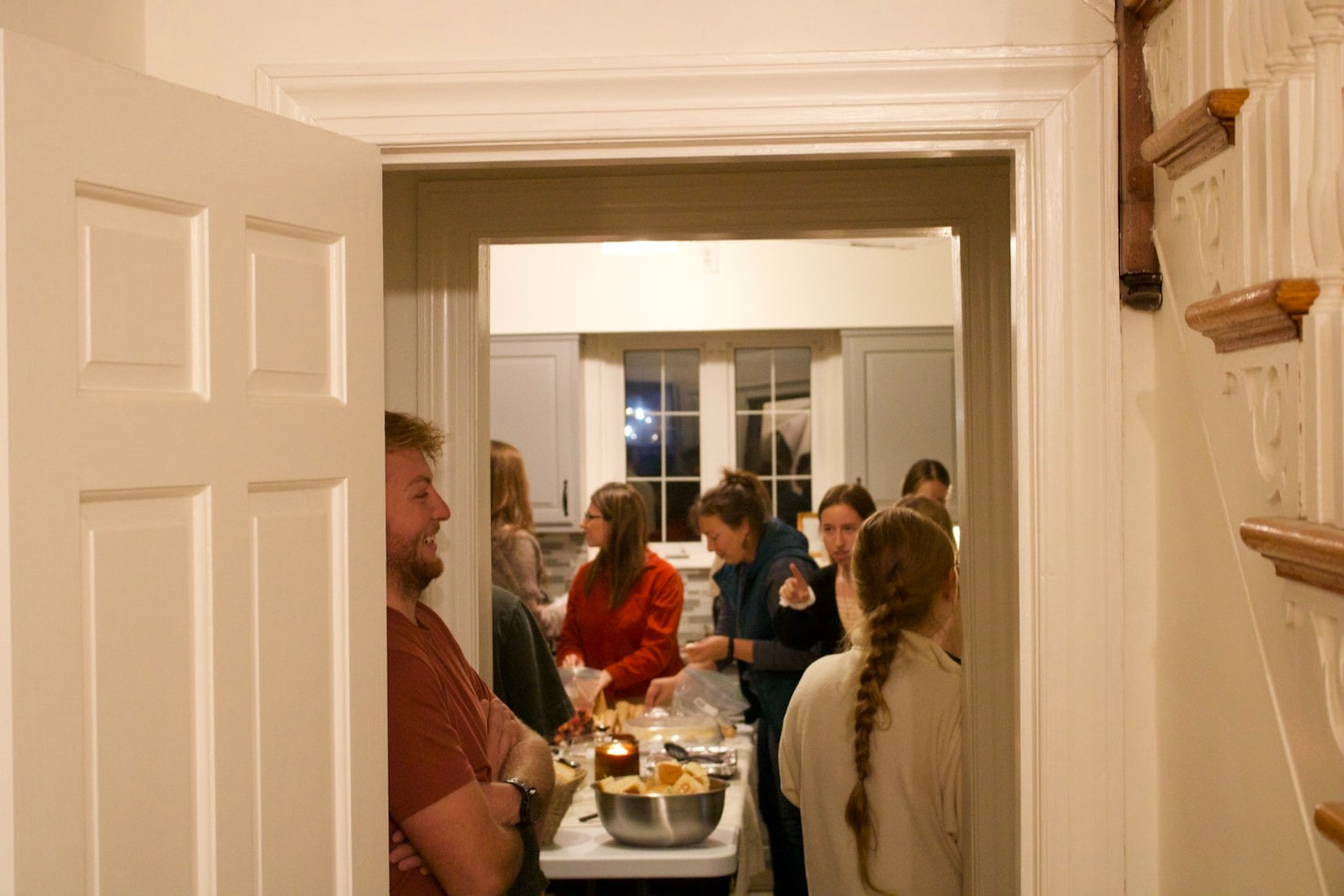
In the architecture of human history, religion has long served as the primary blueprint for community. It provided the halls for gathering, the scripts for ritual, and the shared vocabulary for “meaning.” But for those who have stepped outside those traditional structures—whether by choice, doubt, or a quiet drifting away—the need for profound human connection does not simply vanish.
Finding meaning beyond faith isn’t about filling a “God-shaped hole”; it’s about recognizing that the “hole” was actually a human-shaped space all along. We don’t need a shared deity to experience the sacredness of being seen, the weight of collective grief, or the electricity of shared wonder.
Connections beyond faith are not just possible; they are often deeper because they are chosen. They are built on the bedrock of shared humanity—a foundation that doesn’t require a miracle to hold.
The Myth of the “Built-In” Community
One of the hardest parts of leaving a religious framework is the sudden loss of a “default” social circle. In a church, temple, or mosque, your community is geographically and ideologically pre-packaged. You show up, and the people are there.
Outside of religion, community is intentional rather than default. This can feel exhausting at first, but it offers a far more authentic reward: connections based on shared values and genuine affinity rather than geographic convenience or inherited dogma.


Where to Start Finding “Your People”
If you’re looking for the secular equivalent of a “pew,” consider these avenues:
The “Ritual” of Hobbies: Deep bonds are often forged through “side-by-side” activities. Whether it’s a local choir, a community garden, or a technical makerspace, these groups create regular, low-stakes interactions that eventually deepen into high-stakes friendships.
Building Secular “Sacred” Spaces
“Sacred” is a word often held hostage by religion, but it truly refers to anything we set apart as significant. In a secular life, we create sacredness through Ritual and Presence.
“Sacred” is a word often held hostage by religion, but it truly refers to anything we set apart as significant. In a secular life, we create sacredness through Ritual and Presence.
If you feel a sense of “quiet grief” after leaving religion, know that it is normal. You aren’t missing a ghost; you are missing a village.
The beauty of a life beyond faith is that you are no longer a tenant in someone else’s belief system; you are the architect of your own meaning. You get to decide what is sacred, who your family is, and how you will spend this one “wild and precious life.”
Connections beyond faith are not just possible; they are often deeper because they are chosen. They are built on the bedrock of shared humanity—a foundation that doesn’t require a miracle to hold.